

 Image 1 of 1
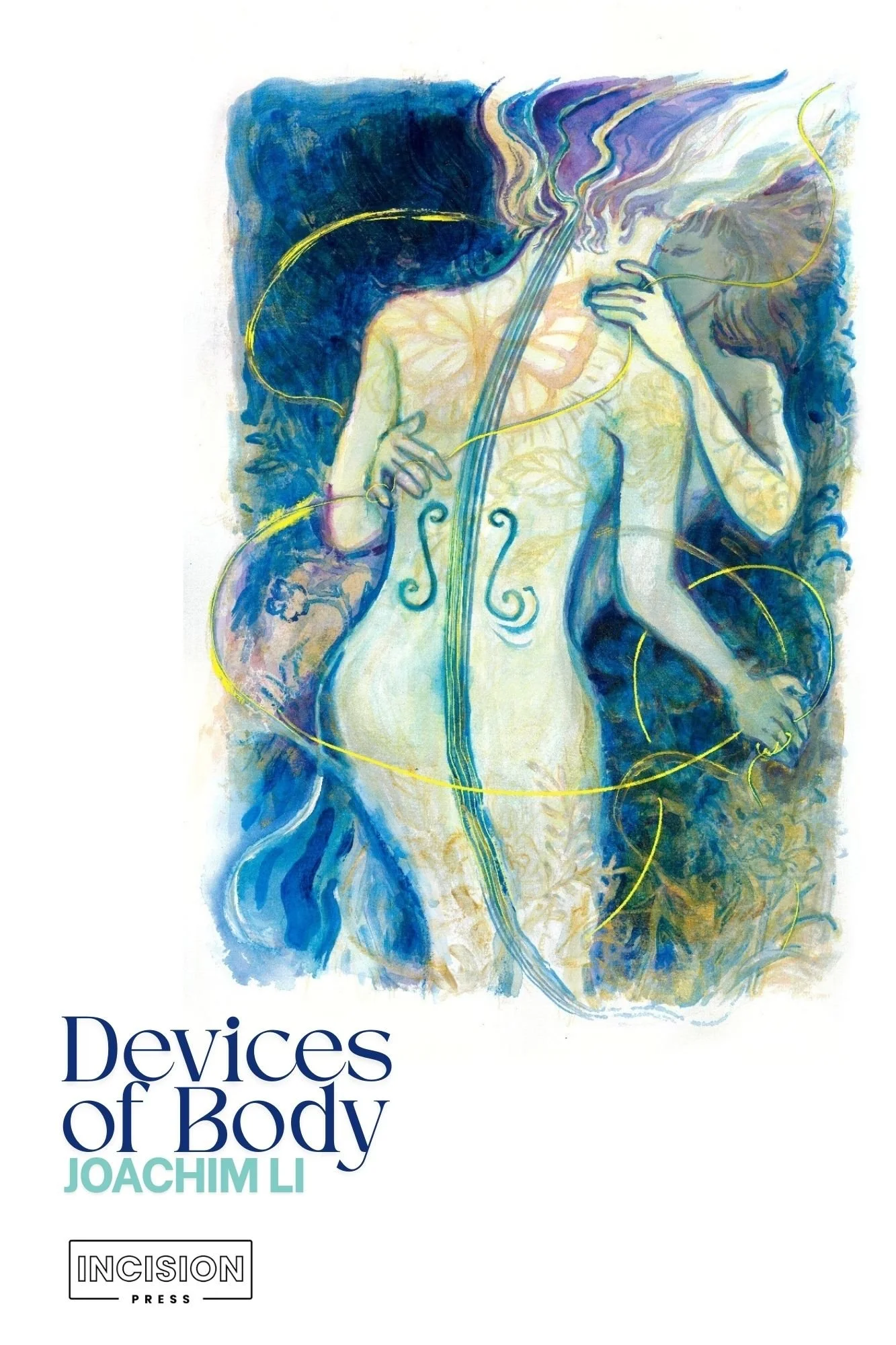
Devices of Body is a visceral archive of survival and becoming — an ode to what the diasporic body endures and remembers. Here is the poet’s world where scars hold their own memory, and how intersecting identities and longing grow into both witness and refuge. This collection stays close to the skin, attentive to all the soft ways we change.
Naming becomes an act of resistance. Moving between English, Chinese, Cantonese, and the liminal spaces between sound and silence, the poet reclaims what risks erasure. When nothing, not even selfhood, feels certain, Devices of Body simply attempts to hold you close, hoping you will stay.
Praise for Devices of Body:
“No one is safe / from touch” Joachim Li declares in Devices of Body, a sharp and fruity poetry collection. Between “Lord” and “Lorde”, “Borges” and “Ostara”, the self is multilingual, relational, and experimental. Poetic forms stretch and bend their voices are “willing to trade / clatter for cadence / prudence for a purpose”. Such exchanges trouble pre-established boundaries: “skin” is “but the edge of a living cosmos”. The poet, bubbling with possibilities, welcomes the reader to a tactile cartography of the diaspora.
— Tim Tim Cheng, author of The Tattoo Collector
Devices of Body is a visceral archive of survival and becoming — an ode to what the diasporic body endures and remembers. Here is the poet’s world where scars hold their own memory, and how intersecting identities and longing grow into both witness and refuge. This collection stays close to the skin, attentive to all the soft ways we change.
Naming becomes an act of resistance. Moving between English, Chinese, Cantonese, and the liminal spaces between sound and silence, the poet reclaims what risks erasure. When nothing, not even selfhood, feels certain, Devices of Body simply attempts to hold you close, hoping you will stay.
Praise for Devices of Body:
“No one is safe / from touch” Joachim Li declares in Devices of Body, a sharp and fruity poetry collection. Between “Lord” and “Lorde”, “Borges” and “Ostara”, the self is multilingual, relational, and experimental. Poetic forms stretch and bend their voices are “willing to trade / clatter for cadence / prudence for a purpose”. Such exchanges trouble pre-established boundaries: “skin” is “but the edge of a living cosmos”. The poet, bubbling with possibilities, welcomes the reader to a tactile cartography of the diaspora.
— Tim Tim Cheng, author of The Tattoo Collector